Can You Use AI-Generated Manga, Art and Music Commercially?
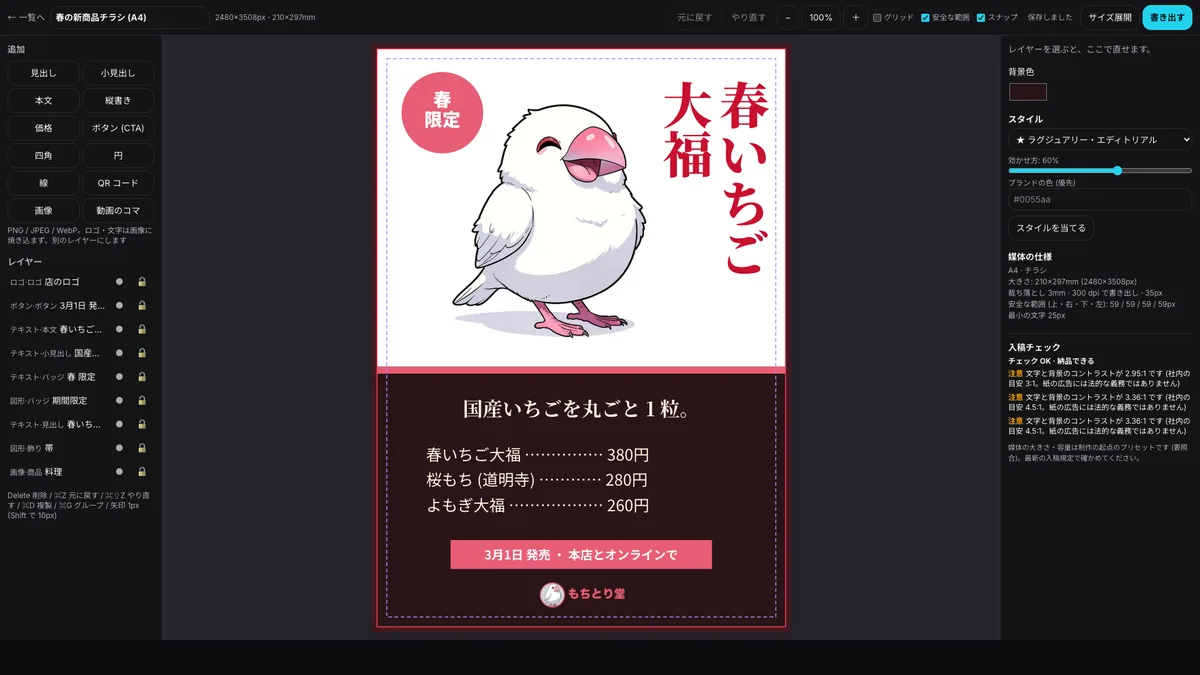
You want to turn an AI-made comic into merch, or use an AI-made song on a monetized channel. Three things need checking: the terms of the service you used, the rights in anything you brought in, and the rules of wherever you publish. This guide walks through that order using BunCho's terms of use as an example. Rules differ by country; this is general information, not legal advice.
Check three things, in this order
Whether you can use AI-generated work commercially is not a single yes-or-no question. Checking in this order makes it easier to sort out.
Neither "it's AI-made, so it's free to use" nor "it's AI-made, so it can't be used" is accurate. Even if the service you used allows commercial use, anything in the work that touches someone else's rights has to be considered separately.
- The terms of the service you used: may you use the output commercially, and under what conditions?
- Rights in what you added or what appears: your own uploaded material, existing characters, real people, trademarks and so on
- The rules where you publish: AI policies of story sites, manga contests, stores and streaming services
BunCho's terms: what you make can be used commercially
Article 2 of BunCho's terms of use says generated text may be used freely, for personal or commercial purposes, at the user's own responsibility. You do not need to state inside the work that you used the service, and the operating company does not own the copyright in generated output.
Beyond text, art, manga, video, voice and music made in the Studio, as well as the shared asset collections (backgrounds, props, speed lines), can also be used for personal or commercial purposes. The generation models BunCho runs on its own servers are limited to ones whose licenses allow commercial use of the output.
See also: Terms of use, Article 2 (in Japanese)
What commercial use does not cover
The same Article 2 excludes the items below. This is the part that deserves the most attention.
For example, if a flyer uses product photos you took or a logo someone permitted you to use, you are responsible for confirming the rights in those photos and that logo. Art made to resemble an existing anime character, or a video using a real person's face, can raise third-party rights issues no matter which tool produced it.
- Anything involving third-party rights: material you uploaded, existing works and characters, real people, trademarks and so on (confirming those rights is the user's responsibility)
- Some synthesized voices, such as the VOICEVOX characters. Follow each one's own terms and credit requirements
- Use for purposes prohibited by Article 3 of the terms
Keep voice credits in place
VOICEVOX is free Japanese text-to-speech software with a cast of character voices. When an explainer video or voice comic uses a VOICEVOX voice, a credit such as "VOICEVOX:Shikoku Metan" is added automatically on export. Follow each character's terms and do not remove the credit shown. Conditions differ by character, so check each character's terms before you monetize.
BunCho's own voices and the singing voices in its song maker do not reproduce the voices of real singers or streamers. Voice cloning and swapping in faces that resemble real people are not available.
Check the rules where you publish
Even when a service's terms allow commercial use, the place you publish may not accept the work. Story sites, manga and fiction contests, game stores and music distributors often have rules on disclosing or accepting AI-generated content, and those rules can change.
Before you enter, register or sell, check the current rules of the destination. BunCho does not promise that anything you make will be accepted by a particular contest or store.
Contest rules deserve special care. Some contests ban AI entirely, some allow it as an assistant, and some allow it if disclosed. If any part of your entry used AI, disclose it the way the rules ask.
Keep records so you can explain later
For work you use commercially, it helps to be able to explain what you used and how you made it. In the Studio, your credit history shows what credits went to, by project, date and type, and can be saved as CSV. When you import your own material, you declare whether it is your own work or licensed.
On the Full Course plan and in the team and business campaign features, the model used, the version of the usage terms, the origin of each asset and the approver are recorded as JSON.
FAQ
Can I sell manga or songs I made with BunCho?
The terms of use say art, manga, video, voice and music made in the Studio can be used commercially. Anything involving third-party rights, such as uploaded material, existing characters, real people or trademarks, is excluded, and confirming those rights is your responsibility.
Do I have to write "Made with BunCho" on my work?
Under the terms you do not need to state in the work that you used the service. Some publishing sites and contests require AI disclosure, though, so follow the rules of the destination.
Can I monetize a video that uses a VOICEVOX voice?
Follow the terms of each VOICEVOX character. Keeping the credit that is added on export is a basic condition, and conditions differ by character.
Do you guarantee that commercial use will cause no problems?
No. Using generated output is at your own responsibility, and checking third-party rights and destination rules is up to you. This guide is not legal advice, and rules differ by country.
Pages we checked for this guide
- BunCho Terms of Use, Article 2: Use of generated content (in Japanese) bun-cho.work · primary source
- BunCho Studio (English) bun-cho.work · primary source
- VOICEVOX terms of use (in Japanese) voicevox.hiroshiba.jp
- Agency for Cultural Affairs, Japan: AI and copyright (in Japanese) bunka.go.jp
Features, prices and screens are as of October 12, 2026 and may change. Images are actual BunCho screens (some show the Japanese interface) and samples made in the Studio. Japanese original