Fan Fiction and Fan Art Rules: 5 Things to Check Before You Publish
You want to write or draw fan works of a story you love. The hard question is how much is actually allowed. This guide sums up, in general terms, what to check before you publish fan fiction or fan art. It is not legal advice: rules differ by country, and it describes common practice in Japan. When a specific decision is needed, follow the rights holder's guidance or ask a professional.
The starting point: it's the rights holder's call
Fan works create something new using the characters or world of an existing work. The original is protected by copyright and other rights, and as a rule it's the rights holder who decides how it may be used. Much fan activity exists because rights holders tolerate it or allow it under conditions.
So "everyone does it" is not a reason it's fine. Policies differ from work to work even within the same genre, and a single work's policy can change over time. Everything below is general information, not legal advice. When in doubt, the rights holder's guidance comes first.
Five things to check before publishing
Before you publish or distribute a fan work, checking at least these points will save trouble later.
- Has the rights holder published fan-activity or fan-work guidelines? If so, they are your main reference
- Commercial or non-commercial? Some works allow free sharing but not paid distribution or monetization
- What you may reuse. Many guidelines forbid copying official art or text as-is (tracing or reposting)
- Content limits. Some forbid adult content or anything that badly damages the work's image
- AI use. Some guidelines forbid AI-assisted fan art or require it to be labeled
How to read a fan-work guideline
Guidelines are often found in the official site's FAQ or on a page about fan activity or fan works. When reading one, look for four things: what it covers (illustrations, fiction, merch, video and so on), how it treats commercial use, what it prohibits, and who to contact.
Not finding a guideline does not mean permission. If you can't tell, the safe choice is to hold off on publishing or ask the rights holder. The places you distribute through, such as fan conventions, online shops and story sites, also have their own rules, so check those too.
Many guidelines include a clause like "stop publishing if the rights holder asks." Assume that even activity that was once allowed may have to stop if the policy changes.
Common misconceptions
Trouble with fan works usually comes from assumptions, not bad intent. None of these is a reason to feel safe.
- "I'm giving it away for free": even non-commercial use can be forbidden by the guidelines
- "I changed the original art a little": tracing or partial edits are often treated the same as reposting
- "Others are doing the same": others being tolerated is no proof that your work is allowed
- "I didn't name the title": using the characters or distinctive settings still makes it a fan work
- "I'll delete it if asked": printed books and sold merch can't be taken back. Checking before publishing is safer
When you use AI
When making images or text with AI, the basic rule is not to enter existing characters' names or looks, or real people. If the output resembles the original, it can raise rights issues just as hand-drawn work can. Story sites and contests often have AI disclosure rules, and those rules can change.
BunCho Studio is a tool for making original work. It may refuse to make things using the names or looks of existing characters or real people. BunCho's terms of use also state that for anything involving third-party rights, such as existing works, characters, real people or trademarks, confirming the rights is the user's responsibility.
See also: Commercial use of AI-made work
Learn from what you love, then make it your own
The instincts you build through fan works, like "I love this kind of relationship" or "I'm a sucker for this twist," are a real strength in original writing. Leave behind the names and distinctive settings of the work you love, keep only the relationship patterns and story shapes, and you can publish and sell the result freely as your own.
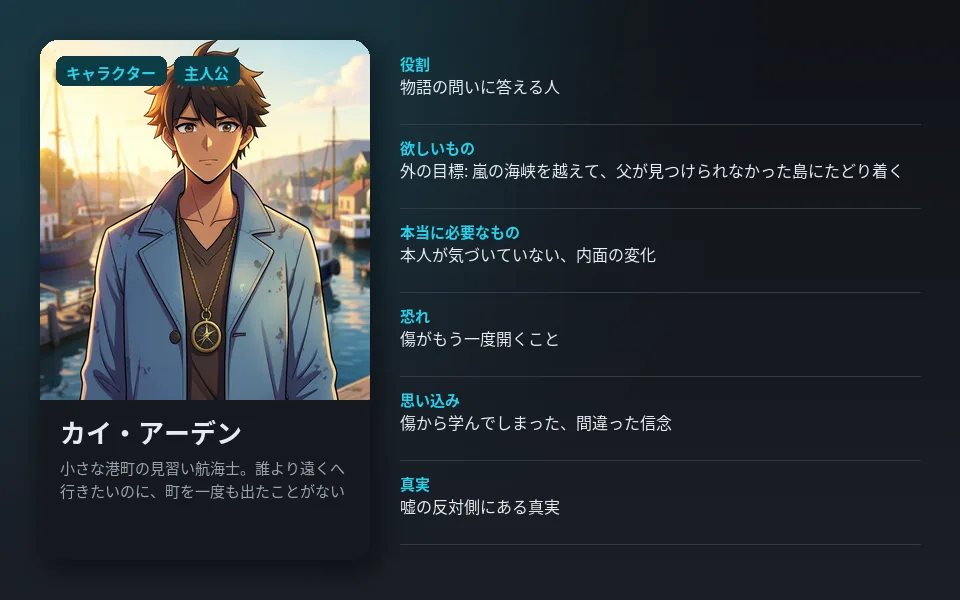
The Studio has character sheets (simple, detailed and tabletop-RPG style), structures like three-act and the four-part kishotenketsu (setup, development, twist, resolution), and 22 story patterns drawn from myths and folktales. Start by putting into words what you love about a favorite work, as a pattern, then swap in your own characters and world.
See also: How to keep an AI character consistent / BunCho for writers
FAQ
If I follow this guide, is it safe to publish my fan work?
This guide is general information, not legal advice, and rules differ by country. The rights holder decides. Check their guidelines before publishing, and if you still can't tell, ask the rights holder or a professional.
If a work has no fan guidelines, am I free to make fan works?
Not necessarily. The absence of a guideline does not mean permission. If you can't tell, hold off on publishing or ask the rights holder.
Can I make fan works with BunCho?
The Studio is a tool for original work. It may refuse to make things using the names or looks of existing characters or real people. Please create original characters.
What should I watch for when selling fan comics (doujinshi)?
Doujinshi are self-published fan comics, often sold at fan conventions in Japan. Some works allow non-commercial fan works but not paid sales. Check both the rights holder's position on commercial use and the rules of where you sell, such as conventions or online shops.
Pages we checked for this guide
- Agency for Cultural Affairs, Japan: Copyright (in Japanese) bunka.go.jp
- Agency for Cultural Affairs, Japan: AI and copyright (in Japanese) bunka.go.jp
- BunCho Terms of Use, Article 2: Use of generated content (in Japanese) bun-cho.work · primary source
- BunCho Studio (English) bun-cho.work · primary source
Features, prices and screens are as of October 12, 2026 and may change. Images are actual BunCho screens (some show the Japanese interface) and samples made in the Studio. Japanese original